
Arriving at Finca la Amistad
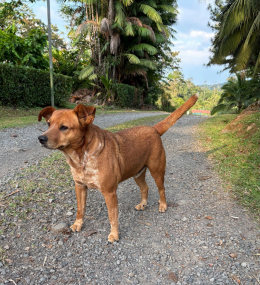
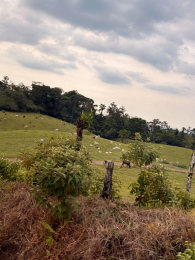
The minute we stepped off the bus at the farm I knew we were in a magical place! The farm itself was lush with every shade of green. It was surrounded by a tropical jungle and rolling pastoral hills in the distance dotted with lean white cows grazing peacefully. One of the farm dogs, Yoda, came running to greet us and flopped over for a belly rub while the cat nonchalantly groomed himself nearby without paying any attention to us.
It was visually absolutely beautiful, but the first thing that struck me was the smell of chocolate in the air! This amazing aroma was a constant source of delight over the three days that I was there. Then I heard the birds singing. There must have been at least a dozen different songs, including a pair of toucans and a flock of parrots in a nearby tree. Paradise!
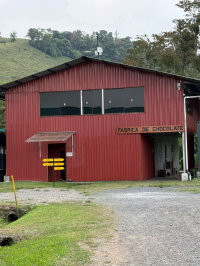
Last month, I had the wonderful opportunity to travel to Costa Rica to a chocolate (or cacao) farm. This ‘chocolate fieldtrip’ was organized and sponsored by Felchlin, a Swiss chocolate company that produces the vast majority of chocolate that we use at Infusion. One of the places that Felchlin sources their cacao beans from is this farm in Costa Rica. The farm is called Finca La Amistad and it is in the northwest region of the country near the Nicoya Peninsula, one of the world’s Blue Zones.
The cacao grown here eventually makes its way to Switzerland, where Felchlin transforms it into the chocolate we use every day at Infusion. Our field trip group included 24 people. This included five of Felchlin’s people and the rest of us were chocolatiers and pastry chefs from all over the United States. The purpose of the trip was to show us one of the places where their cacao was grown and to allow us to experience the origin story of the chocolate we use every day.
After dinner on our first night there, everyone introduced themselves and then passed around a creation that they had made using Felchlin chocolate; each person brought enough to share with the group. Such an amazingly talented and creative group of people and all sooo delicious!
We started our first full day there at 6:30 am, observing one of the farmers hand pollinating a vanilla flower. Vanilla, which is a vining orchid, requires a very specific insect to successfully pollinate. Since the majority of the world’s vanilla is not grown in its native habitat, it must be manually pollinated, which explains why vanilla is not inexpensive!
In addition to growing the Theobroma cacao trees, the finca also grows vanilla, as well as many of the fruits and vegetables that are served to the guests who stay at the farm.
After breakfast, we were taken on a tour of the farm and got to experience all the steps the cacao goes through. These steps include planting and growing the trees, harvesting the pods, opening the pods and removing the beans, fermentation, drying, sorting/cleaning and packaging for transport.
Cacao is exclusively grown in tropical regions within about 20° north and south of the equator, commonly Ecuador, Venezuela, Dominican Republic and Peru. The Theobroma cacao tree thrives in the hot and humid conditions of these countries and requires shade from larger/taller trees, so there are very particular conditions that must be met.
While the cacao is grown in equatorial regions, the majority of the beans are shipped to other locations and processed from beans into actual chocolate products. Most commonly these production facilities are European, as is the case with Felchlin. At these facilities, the bean undergoes another half dozen or more steps to produce the actual chocolate products (but that’s another story!).
From Pod to Bean
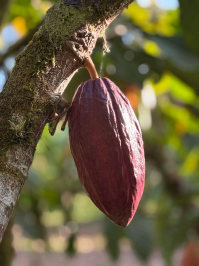
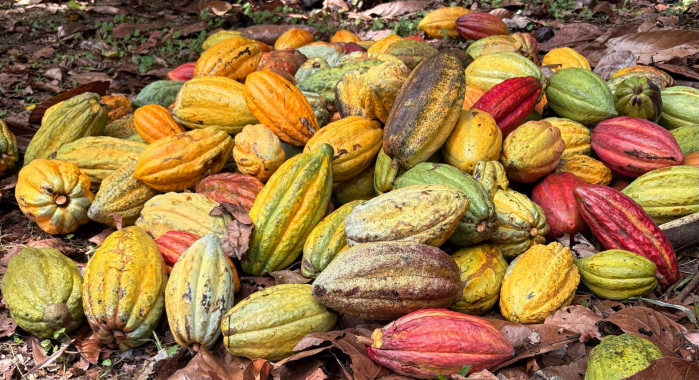
The trees are similar in size to an apple tree and begin producing cacao in about 3 years. They produce pods, which are about 6–12 inches long and oval shaped. The pods are unique in that they sprout directly from the trunk or main branches of the tree. They vary in color from bright yellow, vibrant orange, deep red and purple or mottled green.
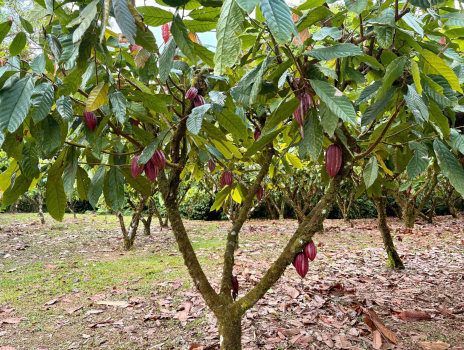
This farm had trees in several different areas around the property. About once a week, each tree is visited by a farmer and the ripe pods are harvested. As the pods mature, the color changes, and time to harvest is determined by the appropriate color. The pods must be carefully harvested by hand so as to not damage the node or cushion on the tree that the pod grows from.
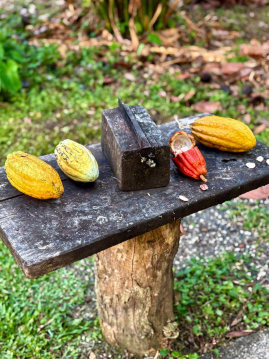
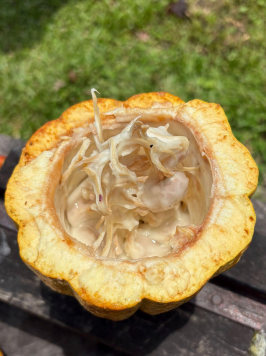
Once all the ripe pods are harvested for the day, they are taken to a central location to cut open the pods using a block with a large sharp blade and a good ‘whack’. Inside the pod, there are about 30 to 50 almond-sized seeds which are surrounded by a white gooey pulp.
We got to taste the pulp. I was surprised at the tangy and citrusy taste with no chocolate flavor at all! Each meal we ate on the farm was accompanied by fruit flavored water, usually a combination of whatever fruits were ripe and available that day. For one of the meals, the juicy water was made with this cacao pulp and it was delicious!
At several points throughout each day, we observed and participated in smelling and tasting the cacao in all its various forms as it moved along the process. This reinforced the idea that chocolate is a sensory delight to be seen, smelled, savored, tasted and enjoyed!
Fermentation: Where Flavor Begins
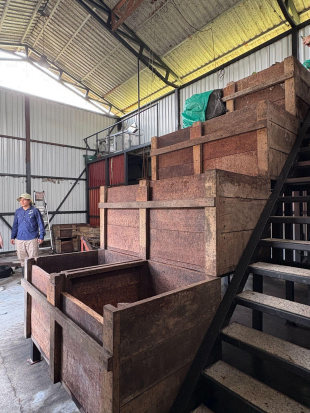
After the seeds are removed from the pods, they are taken to the fermentation shed. This area consists of four large stair-stepped bins. The beans start on the top layer and spend two days at each level until they are moved down to the next step. On the first or top layer, the seeds and the pulp are wrapped in large banana leaves. The pulp has natural sugars and plant acids and this feeds the fermentation process of the beans which helps flavor develop. The fermentation room was noticeably warmer than other areas on the farm. The aroma was pungent, reminding me of a chocolate version of fermenting kombucha.
Drying Under the Costa Rican Sun
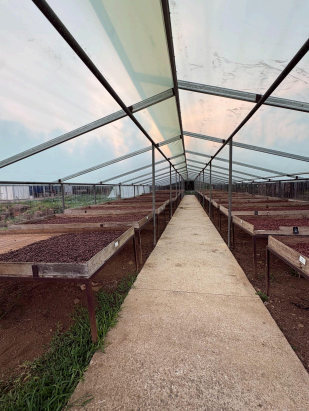
When fermentation is complete, the beans are moved to the drying area. The drying area consists of large raised shallow platforms where the beans are spread out in a single layer and are manually stirred every couple hours to ensure they are all exposed to the sunlight and the air which will dry the beans. This open air room is where a lot of the chocolate smell that dominates the farm is coming from.
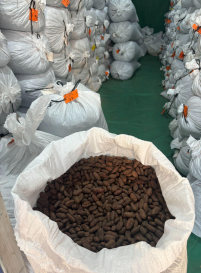
After drying, the beans are sorted, any debris is removed and they are bagged for transport. On this particular farm, they actually keep some of their cacao beans and process them into chocolate bars and other confections but the majority of them are sent to Felchlin’s facility in Switzerland.
Planting My Own Cacao Tree
Another highlight of the trip is that we all got to plant our own cacao tree, a seedling that was about a foot tall. For this adventure, we visited another area of the farm that was hilly, shady and especially beautiful. They had made tags for all of us with our names and the date to go along with our newly planted tree. So, when I go back to visit the farm (hopefully in a few years) I will be able to find ‘my tree’.
Standing in the shade of the young cacao grove, planting a tree that may still be producing cacao decades from now, gave me an entirely new appreciation for the long-term commitment involved in growing chocolate.
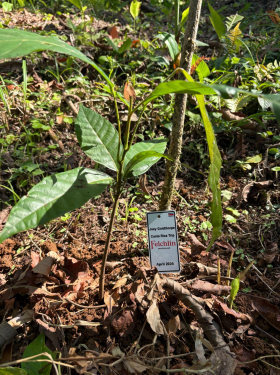
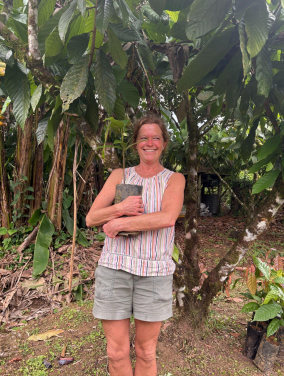
My tree!
Chocolate Tasting: More than Milk vs. Dark
We also had a very eye-opening and mouth-watering chocolate tasting lab. We had to do this early in the morning (before breakfast and coffee) so that our palates were clear.
Many times we think of chocolate variations only in terms of milk or dark chocolate. But there are so many more variations and complexities than that. For example, three different dark chocolates that were all 70% dark chocolate tasted completely differently, depending on the strain of the bean, the location it was grown and the processing technique. One version had flowery notes, another had nutty flavor, while a third was a more straight-forward chocolate taste.
Much like wine grapes or coffee beans, cacao reflects its genetics, growing conditions, and processing. The result is that three chocolates with the same cacao percentage can taste remarkably different.
We also got to taste a rare Bolivian chocolate, which was very unique and intense. This cacao is one of the only ones that grows wild in the jungle, as opposed to most cacao which is cultivated.
Why This Experience Matters
Overall I was so impressed by everything I saw and learned during this experience. I always knew that Felchlin had a great product, because I taste it every day as part of my job, but to see the care and investment that is made at every step of the way was amazing. Members of the Felchlin team visit every farm that they buy their cacao beans from at least once a year to ensure that the highest standards are met.
This also includes making sure that working conditions for the farmers and crew are good. The dozen or so farm hands at this farm definitely worked hard, but they seemed very happy, were exceedingly friendly, and all seemed very proud of the work that they did and what they produced. The kitchen crew was the same, a delightful group of women who served simple but delicious meals always with a smile and a con mucho gusto.
During my time at Finca La Amistad, I was struck not only by the beauty of the farm, but also by the warmth and generosity of the people. Costa Rica’s famous phrase “Pura Vida” (“pure life”) reflects an attitude of gratitude, community, and appreciation for life’s simple pleasures. After spending time with the farmers, kitchen staff, and Felchlin team, I came to understand why that philosophy is so deeply woven into the culture.
Seeing the journey of cacao firsthand gave me a deeper appreciation for every piece of chocolate we make at Infusion. Behind every truffle is a story that begins thousands of miles away with dedicated farmers, careful craftsmanship, and a remarkable amount of patience.